How Are Global Sourcing Trends Shaping the Market for Organic Uva Ursi Leaf Powder
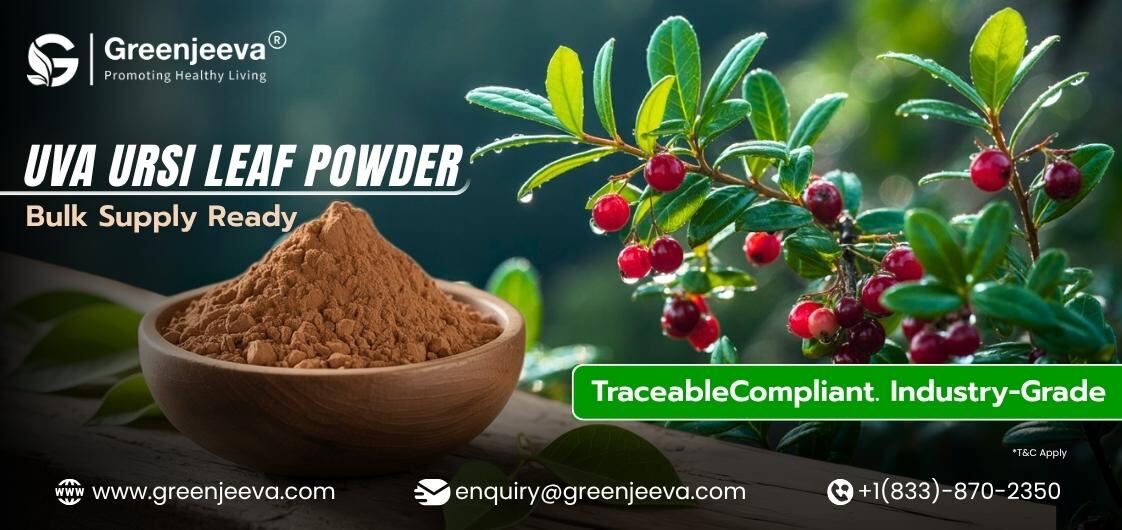
Global supply chains for botanical ingredients are under closer scrutiny than ever. For procurement managers, sourcing heads, and R&D teams, the focus is no longer just on price but also on sustainability, traceability, and compliance.Organic Uva Ursi Leaf Powder, widely recognized in trade as Arctostaphylos uva-ursi leaf, has become part of this conversation as industries expand its use in supplements, functional teas, cosmetics, and specialty formulations.
But how do sourcing origins, certifications, and evolving market trends actually affect decision-making for buyers today? And what should teams consider before finalizing a bulk order? This blog takes a closer look at the industrial insights and sourcing shifts shaping the market for Organic Uva Ursi Leaf Powder.
What Is Driving Procurement Interest in Organic Uva Ursi Leaf Powder
Buyers want to know why this botanical is gaining traction and how sourcing trends are influencing purchase decisions.
Organic Uva Ursi Leaf Powder has moved beyond niche herbal use and into multiple industries. Sourcing heads often prioritize it because:
- It is a plant-based ingredient that aligns with clean-label strategies.
- Its leaf powder format allows easier blending in nutraceuticals and tea formulations.
- Suppliers now provide detailed documentation, from Certificates of Analysis to allergen statements, which supports compliance needs in regulated markets.
These drivers explain why Uva Ursi Leaf Powder bulk sourcing requests are becoming more frequent in North America and Europe.

How Do Supply Origins Affect Organic Uva Ursi Powder Quality
Geographic origin and harvesting practices directly influence consistency and procurement reliability.
Most commercial supplies of Uva Ursi herbal powder come from wild harvesting in colder regions, including Eastern Europe, Russia, and parts of Asia. The harvesting environment, drying method, and storage conditions shape quality outcomes such as moisture content, arbutin levels, and particle size.
Procurement managers evaluating Uva Ursi Powder suppliers typically ask:
- Was the crop wild-harvested or cultivated?
- Are drying methods controlled to prevent microbial load?
- Is the supply chain traceable back to the harvest lot?
These sourcing details help R&D teams determine whether the raw material can meet formulation stability and uniformity standards.
What Specifications Do Buyers Check When Ordering Uva Ursi Powder Wholesale
Procurement teams prioritize measurable specifications to avoid variability and ensure compliance.
Before finalizing Uva Ursi Powder wholesale orders, buyers review supplier specifications such as:
- Moisture content (≤5% is common in COAs).
- Particle size distribution (80–120 mesh for consistent blending).
- Heavy metals testing within defined ppm limits.
- Microbiological parameters including total plate count, yeast, and mold.
In addition, COAs often report arbutin presence, a naturally occurring compound in uva ursi leaves. While whole-leaf powders may not be standardized, reliable suppliers provide assay values when requested. This level of specification is crucial for Uva Ursi Powder for supplements and beverage formulations where consistency matters.

Why Are Documentation and Certifications Essential in Bulk Procurement
Bulk buyers must demand proper certifications to mitigate compliance risks and protect product claims.
When purchasing Organic Uva Ursi Leaf Powder in bulk , documentation is as critical as the ingredient itself. Procurement teams routinely ask suppliers for:
- Organic certificates to validate clean-label claims.
- COAs for each lot covering physical, chemical, and microbiological tests.
- Allergen reports, MSDS, and in some cases, pesticide residue screenings.
- Country of origin statements to ensure traceability.
These documents support regulatory filings, product registrations, and quality assurance audits. Without them, the risk of supply rejection or relabeling rises significantly.
How Are Different Industries Using Uva Ursi Leaf Powder
Industrial applications vary, but formulation approaches share a focus on functionality, compliance, and sensory considerations.
- Nutraceuticals and dietary supplements:Used in capsules, tablets, and herbal blends. Formulators assess compressibility and blending uniformity before scaling production.
- Functional teas and beverages:Often referred to as Uva Ursi for tea, the powder provides a botanical note but requires suspension testing to manage settling and color stability.
- Cosmetics and personal care:Incorporated as a botanical ingredient in topical products, where particle fineness and batch consistency are critical.
- Animal feed and pet nutrition:Applied at low inclusion rates in specialty herbal mixes, subject to compliance with feed additive regulations.
Across these industries, the choice between whole powder and standardized extract depends on whether a clean-label narrative or a defined compound content is prioritized.
What Market Trends Are Influencing Bulk Uva Ursi Powder Sourcing
Demand is being shaped by sustainability, regulatory oversight, and growing use in personal care.
Market trends influencing sourcing include:
- Shift to standardized extracts:R&D teams increasingly request arbutin-standardized forms to reduce variability.
- Demand for transparency:Buyers want proof of origin and harvesting methods to ensure ethical and compliant sourcing.
- Cosmetic industry growth:Personal care formulators are testing new applications of Uva Ursi herbal powder, pushing demand beyond supplements and teas.
- North American demand stability:Interest remains steady in the U.S., where supplement and functional food sectors continue to incorporate botanical powders.
For procurement leaders, these trends signal the need to secure long-term supplier relationships and consider future scalability.
What Should Buyers Keep in Mind Before Finalizing Bulk Orders
Practical steps can reduce sourcing risks and ensure reliable supply.
Before approving a bulk purchase, buyers should:
- Test pilot samples under real processing conditions.
- Verify heavy metal and microbial testing through third-party labs.
- Negotiate packaging that supports dust control and long-term storage.
- Align MOQs with production forecasts to prevent over-stocking.
By following these steps, manufacturers reduce formulation risks and protect their supply chain from disruptions.
Conclusion
The market for Organic Uva Ursi Leaf Powder is being shaped by a mix of sourcing realities and evolving industry expectations. Quality, traceability, and regulatory readiness matter as much as cost. For procurement teams and R&D professionals, understanding these dynamics is the key to securing consistent supply and meeting compliance requirements across supplements, teas, cosmetics, and functional products.
Green Jeeva supports manufacturers, procurement heads, and R&D teams with reliable sourcing of Organic Uva Ursi Leaf Powder backed by documentation, compliance, and bulk availability. If your team is evaluating this ingredient for upcoming formulations, register on our B2B ecommerce platform to get a free sample or bulk.
**The Food and Drug Administration has not evaluated these statements. This product is not intended to diagnose, treat, cure, or prevent any disease.**