Cosmetic Ingredient Trends for 2026: Clean, Sustainable and Upcycled Formulations for Bulk Buyers
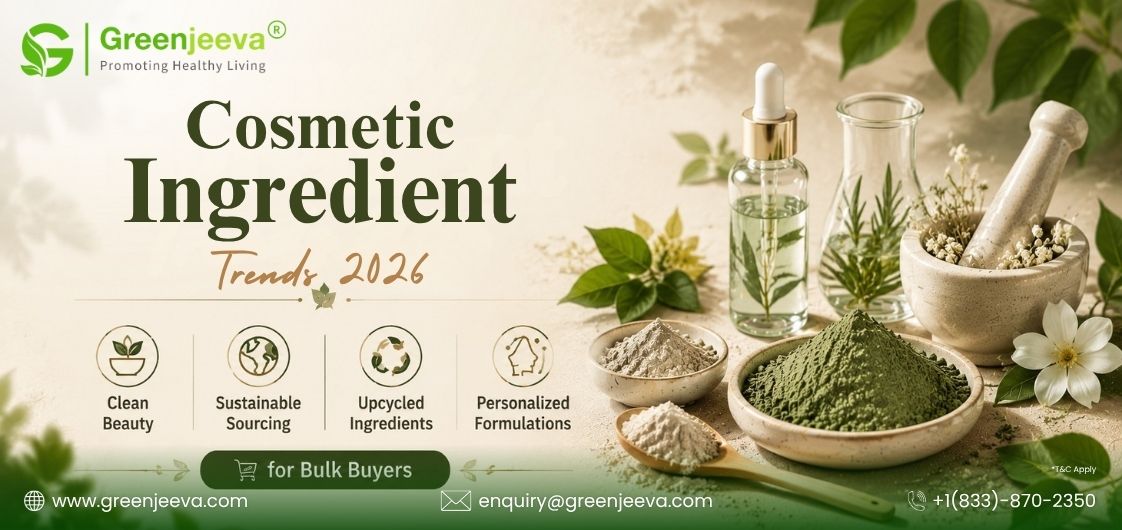
Cosmetic ingredient trends are moving fast in 2026, and formulators who buy raw materials in bulk need more than a list of buzzwords. This guide breaks down the clean, sustainable, upcycled and personalized cosmetic ingredients shaping the market this year, and shows exactly how to source wholesale cosmetic ingredients from a verified cosmetic raw material supplier.
What Are the Latest Trends in Cosmetic Ingredients in 2026?
The latest trends in cosmetic ingredients center on five shifts: clean and sustainable sourcing, adaptogen and peptide driven skincare actives, upcycled and circular economy materials, personalized formulations, and closer collaboration between the beauty, wellness and healthcare industries. Together these trends are pushing brands toward ingredients that are traceable, multi-functional and backed by real sourcing data.
Formulators are no longer satisfied with a spec sheet and a certificate of analysis. They want to know where an ingredient was grown, how it was processed, and whether it fits a clean label claim. That demand is why cosmetic raw material suppliers are playing an increasingly important role in the industry, acting less like distributors and more like sourcing partners who can verify origin, certification and supply consistency at scale.
At the same time, technology is reshaping formulation itself. Anti-pollution actives, AI assisted formulation tools and biotech derived peptides are moving from niche to mainstream, giving brands new ways to address urban skin stress and personalization at once.

Clean and Sustainable Cosmetic Ingredients
Clean beauty ingredients are raw materials that are responsibly sourced, free of ingredients widely flagged as harmful, and independently verified rather than self-declared. Sustainable cosmetic ingredients go a step further, requiring documented environmental and social practices across farming, processing and packaging, not just the final formulation.
Third party frameworks give this claim teeth. The COSMOS-standard now certifies raw materials and finished products across more than 80 countries, and its criteria cover everything from permitted processing methods to packaging requirements. Buyers evaluating a supplier's clean beauty claims should ask which certifications back them up rather than accepting "natural" or "green" on a label at face value. Green Jeeva's certified ingredients catalog lists which raw materials carry this kind of third-party verification, and the certifications page explains the audits behind them.
Sustainability also shows up upstream, in how ingredients are farmed. Direct farm sourcing shortens the supply chain, improves traceability, and gives buyers visibility into growing conditions that a generic distributor usually cannot provide. You can see how this works on Green Jeeva's farms page.
Innovative Skincare Ingredients: Adaptogens, Peptides and Retinol Alternative
Innovative skincare ingredients for 2026 are led by adaptogens, biotech peptides and retinol alternatives, each addressing a specific formulator need: stress resilient skin, targeted anti-aging signaling, and gentler exfoliation for sensitive skin types. These actives are increasingly used together rather than in isolation, since combining them lets formulators address multiple skin concerns in a single product.
Adaptogens such as ashwagandha have moved from wellness supplements into skincare because early research suggests they help skin manage environmental and oxidative stress.
Peptides remain one of the most requested categories for anti-aging claims, prized for their ability to signal collagen production without the irritation some consumers experience with stronger actives. Retinol alternatives, including bakuchiol and encapsulated retinol blends, are trending for the same reason: formulators want retinol like results with a lower barrier to entry for sensitive skin and pregnancy safe product lines. Cruelty free cosmetic components are a standard expectation across all three categories now, not a premium add on.
Upcycled and Circular Economy Cosmetic Ingredients
Upcycled cosmetic ingredients are raw materials derived from food, agricultural or manufacturing byproducts that would otherwise be discarded, reprocessed into usable actives instead of going to waste. They matter because they reduce the environmental footprint of an ingredient before it ever reaches a formulation, while often carrying antioxidant or nutrient profiles similar to their non upcycled counterparts.
Fruit seed oils pressed from juicing byproducts, fermented extracts made from spent grains, and repurposed plant material from food processing are all examples of circular economy beauty ingredients gaining traction in 2026. Brands use them both for the sustainability story and because upcycled sourcing often improves supply consistency, since the byproduct stream already exists at scale from another industry. Green Jeeva's private label services team can advise on which upcycled actives pair well with a brand's existing formulations.

Personalized Cosmetic Formulations for Modern Brands
Personalized cosmetic formulations tailor an ingredient blend to a specific skin type, climate or lifestyle need rather than using a single formula for every customer. For B2B buyers, this trend shows up as demand for smaller batch custom blends, modular ingredient systems, and faster turnaround on formulation changes.
This is a sourcing challenge as much as a formulation one. A supplier needs the raw material inventory and blending capability to support many small, specific formulations rather than one large run. Green Jeeva's signature premix solutions are built for exactly this use case, letting brands order pre blended, personalization ready bases in smaller volumes without sacrificing consistency between batches.
How to Source Wholesale Cosmetic Ingredients in Bulk
To source wholesale cosmetic ingredients in bulk, start by confirming a supplier's certifications and documentation, request a certificate of analysis and samples for your specific actives, then compare minimum order quantities and pricing tiers before placing a purchase order. Working with a supplier that also offers private label and blending support reduces the number of vendors you need to manage.
Green Jeeva ships raw ingredients from its Cerritos, California facility across the United States, and customers in and around Canada can access same day shipping through Green Jeeva Canada. Buyers can browse the full raw ingredients catalog, review volume pricing through Optimize My Pricing, or book a demo to discuss bulk requirements with a sourcing specialist directly.
Comparison: Legacy Actives vs. 2026 Trend Alternatives

Buying Guide: What to Check Before You Order in Bulk
• Ask for the certificate of analysis (COA) for the specific lot you would receive, not a generic spec sheet
• Confirm which third party certifications apply, such as COSMOS, and request the certificate number
• Request a small sample before committing to a full bulk order
• Compare minimum order quantities and tiered pricing across at least two suppliers
• Check whether the supplier offers private label or custom blending if you need a finished formulation rather than a raw material
• Confirm shipping timelines to your region, including cross border options if you are sourcing from outside the United States
Source Verified Ingredients from Green Jeeva
Green Jeeva is an ingredient supplier working with organic and clean beauty manufacturers who need more than a catalog listing certified sourcing documentation, safety data, and GMP-aligned supplier records to back up every raw material. As a certified ingredient supplier, we work directly with formulators to make that verification process visible, not something you have to chase down after the fact.
Request a free sample to see the documentation behind a specific ingredient or download our sourcing and safety documentation to review before you formulate.