What Are the Key Differences Between Whole Root Powder and Extract Powder of Organic Marshmallow Root
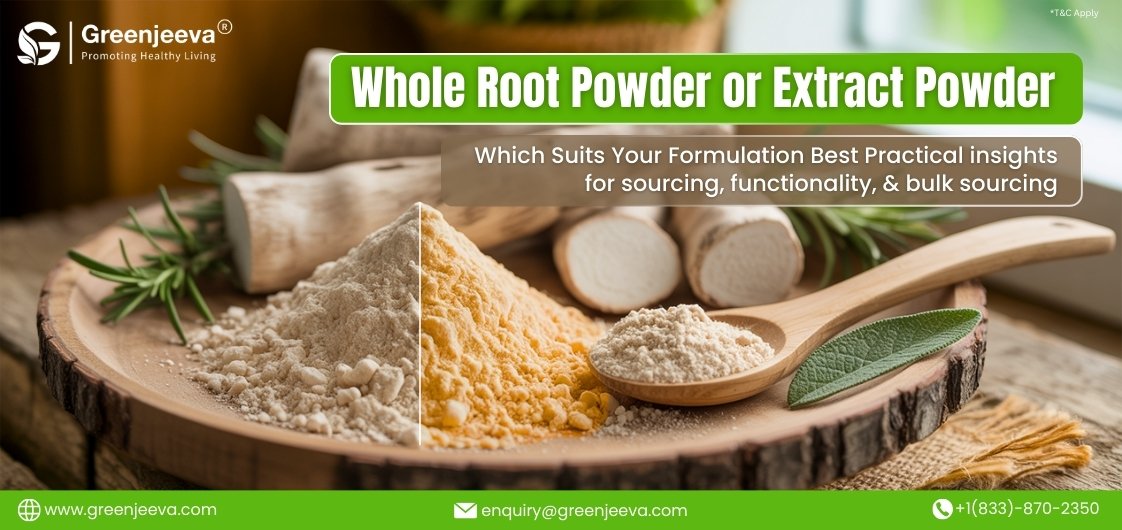
For manufacturers and sourcing teams, the way a botanical ingredient is processed often determines how it performs in finished formulations. This holds true for Organic Marshmallow Root Powder, where both whole root powder and extract powders are available on the market. While they share a common origin—the root of Althaea officinalis—their composition, functionality, and procurement considerations differ significantly.
Understanding these differences helps procurement managers, R&D teams, and product formulators make informed choices, particularly when sourcing from a bulk Organic Marshmallow Root Powder supplier.
Below, we break down the distinctions between whole root powder and extract powder, with an emphasis on formulation efficiency, clean-label compliance, and bulk supply readiness.
What Is Whole Root Powder of Organic Marshmallow Root
Whole root powder is the simplest form of the ingredient. It is made by cleaning, drying, and milling the raw marshmallow root into a fine powder.
- Composition: Whole root powder contains the natural balance of mucilage polysaccharides, starches, fibers, and trace phytochemicals present in the raw root.
- Functionality: Known for its ability to provide viscosity and mild thickening in aqueous systems, whole powder is often used in formulations where a natural plant identity and minimal processing are priorities.
- Supply readiness: Buyers sourcing wholesale Organic Marshmallow Root Powder typically receive material tested for particle size distribution, moisture, microbial counts, heavy metals, and compliance with USDA Organic standards.
What Is Extract Powder of Organic Marshmallow Root
Extract powders are produced by processing the dried root through water or hydroalcoholic extraction, followed by concentration and spray drying into powder form.
- Composition: Extract powders are typically standardized to deliver a higher concentration of mucilage polysaccharides compared to the whole root. Depending on extraction ratio (e.g., 4:1 or 10:1), less material is required to achieve functional results in formulations.
- Functionality: Extract powders provide more consistent viscosity, dispersibility, and batch-to-batch uniformity. This makes them suitable for applications where controlled functionality is essential, such as in beverages or topical systems.
- Supply readiness: When sourcing extracts, buyers should verify extraction method, solvent statements, residual solvent testing, and standardization details along with standard documentation like COA and organic certificate.

How Do Formulators Choose Between Whole Root Powder and Extract Powder
For manufacturers, the choice depends on the intended application and target market positioning.
- Whole Root Powder: Preferred when product labeling needs to reflect “whole herb” use, or when clean-label minimal processing is prioritized. This form is often selected for nutraceutical powders, capsules, and functional food blends.
- Extract Powder: Chosen when a consistent viscosity level or higher mucilage concentration is required. It is commonly used in functional beverages, cosmetic bases, and topical preparations, where formulation stability and texture must be uniform.
What Documentation Should Buyers Request When Sourcing in Bulk
Procurement teams must evaluate documentation carefully, regardless of whether they are sourcing whole root or extract powders.
Essential documentation includes:
- Certificate of Analysis (COA): Moisture content, ash, microbial counts, heavy metals, and mesh size (for whole root powders).
- Organic Certification: Confirmation of USDA Organic Marshmallow Root Powder status for compliance with clean-label requirements.
- Allergen and Non-GMO Declarations: Assurance that the material qualifies as Non-GMO Organic Marshmallow Root Powderand Allergen-free Organic Marshmallow Root Powder.
- Safety Sheets: MSDS/SDS for handling and storage.
Extraction Statement (for extracts): Solvent used, extraction ratio, and residual solvent analysis.
These documents are vital for regulatory compliance and should be part of every bulk sourcing agreement.

What Are the Storage and Handling Considerations
Both whole root and extract powders are sensitive to moisture and should be stored in airtight, food-grade containers. Standard recommendations include:
- Temperature: Store in a cool and dry place.
- Packaging: Multi-layer bags or fiber drums with inner liners to protect against humidity.
- Shelf Life: Typically 24–36 months depending on packaging and storage conditions.
Monitoring water activity, odor, and appearance at regular intervals helps ensure consistency during storage.
How Do Market Trends Affect Procurement of Organic Marshmallow Root Powder
The demand for bulk Organic Marshmallow Root Powder has been growing steadily across nutraceutical, functional beverage, and cosmetic industries. Several factors are shaping sourcing practices:
- Clean-label movement: Buyers increasingly request USDA Organic and Non-GMO certifications as part of supplier qualification.
- Functional formulation trends: Extract powders are gaining traction in beverages and personal care products due to their consistent functional performance.
- Supply chain checks: With increased scrutiny on heavy metal limits and allergen declarations, sourcing teams are prioritizing suppliers that provide transparent compliance documentation.
For procurement heads, this means aligning with suppliers capable of offering both forms—whole root and extract—alongside robust testing data.

Things To KnowAbout Marshmallow Root Sourcing
- Harvest timing matters: Mucilage content in marshmallow roots tends to be higher when harvested in late autumn or early winter.
- Cultivation vs. wild collection: Commercial supplies are typically cultivated, as wild harvesting is restricted in some regions to preserve plant populations.
- Formulation flexibility: While extract powders are more concentrated, whole root powders are often favored for traditional positioning and straightforward labeling.
These factors can influence procurement decisions, especially for R&D teams developing next-generation formulations.
Conclusion
For sourcing managers and formulators, the choice between whole root powder and extract powder of Organic Marshmallow Root Powder comes down to application needs, regulatory requirements, and desired functionality. Whole root powder delivers the full botanical profile with minimal processing, while extract powders provide higher consistency and concentration for demanding applications.
In both cases, procurement teams must evaluate certifications, COAs, allergen and Non-GMO statements, and supplier compliance before placing bulk orders. With demand for wholesale Organic Marshmallow Root Powder expected to grow in the USA across nutraceuticals, functional foods, cosmetics, and personal care, manufacturers who establish reliable sourcing partnerships today will be well-positioned to meet evolving formulation demands.
Looking to source Organic Marshmallow Root Powderin bulk with confidence?
Green Jeeva provides compliant, traceable, and ready-to-ship material supported by detailed technical documentation. Connect with our team today to request free samples, download specifications, and secure your nextbulk supply of marshmallow root powders.
For more information, visit https://www.greenjeeva.com/.
**The Food and Drug Administration has not evaluated these statements. This product is not intended to diagnose, treat, cure, or prevent any disease.**