Is Dairy Free Coconut Milk Powder a Better Alternative to Dairy Milk Powder
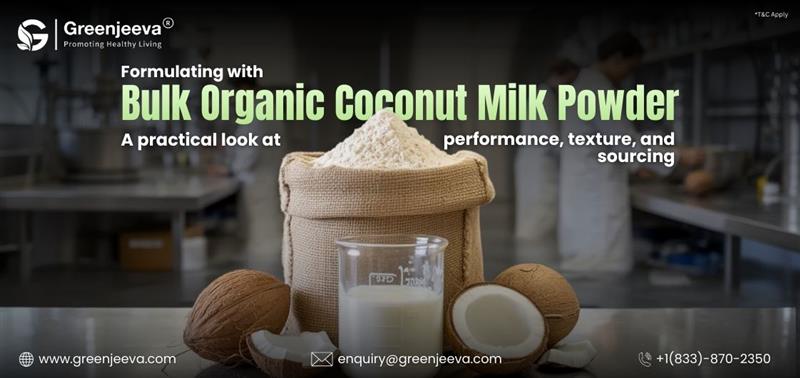
The shift toward plant-based formulation is no longer limited to niche products. Across functional foods and beverages, manufacturers are reassessing traditional dairy ingredients in favor of more stable, label-friendly, and supply-efficient options. One ingredient that continues to gain attention is organic coconut milk powder, particularly in applications where creaminess, fat content, and dry blend compatibility are important.
For procurement teams and formulators, the comparison is less about trends and more about performance, handling, labeling, and sourcing reliability. Here is how dairy-free coconut milk powder compares to conventional dairy milk powders from a manufacturing perspective.
What is dairy free coconut milk powder and how is it different from dairy milk powder
Coconut milk powder is a plant-based milk powder made from spray-dried coconut milk, while dairy milk powder comes from dehydrated animal milk and contains lactose and dairy proteins.
Organic coconut milk powder is produced by extracting milk from fresh organic coconut meat and converting it into a free-flowing powder through controlled spray drying. The result is a high-fat, low-moisture powder that reconstitutes into a creamy liquid or functions directly in dry systems.
Dairy milk powders, such as whole milk powder or skim milk powder, are derived from cow’s milk and contain lactose, casein, and whey proteins. These components influence browning, solubility, and allergen labeling requirements.
Key distinctions for industrial buyers:
- Source: Coconut vs animal dairy
- Allergen profile: Coconut is not classified as a major allergen in the U.S., while dairy is
- Label positioning: Supports dairy-free and plant-based product positioning
- Flavor profile: Coconut milk powder contributes mild coconut notes, unlike neutral dairy milk powder
This makes organic coconut milk powder particularly relevant in formulations where dairy avoidance, plant-based claims, or tropical flavor alignment are priorities.

How does organic coconut milk powder perform in food and beverage formulations
It contributes creaminess, fat content, and emulsification support while remaining suitable for dry blending and shelf-stable systems.
From a functional standpoint, coconut milk powder is valued for its fat content (typically around 47–53%), which plays a key role in mouthfeel and body. In powdered beverage mixes, instant soups, sauces, and bakery premixes, it provides richness without adding liquid water during production.
Important functional characteristics include:
- Creamy texture contribution in reconstituted beverages and culinary systems
- Emulsion support due to natural coconut fat and solids
- Dry blend compatibility for powdered drink mixes and seasoning systems
- Low moisture (NMT 10%) supporting shelf stability and reduced caking when stored properly
The pH of a 10% solution typically falls between 5 and 8, which fits within many neutral to mildly acidic food systems. Free fatty acid levels are usually kept low (NMT 0.15%), helping maintain flavor stability during storage.
Compared with dairy milk powder, coconut milk powder behaves differently in high-heat applications because it lacks dairy proteins that participate in Maillard browning. This can be an advantage or limitation depending on the intended product outcome.
Where is plant based milk powder used in industrial applications
It is widely used in plant-based beverages, dry beverage mixes, bakery products, sauces, and dairy-alternative systems.
A plant-based milk powder like organic coconut milk powder is integrated across multiple product categories:
Functional Beverages
Used in powdered latte mixes, smoothie bases, and nutritional beverage blends where a creamy base is required without dairy components.
Savory and Culinary Products
Added to soup bases, curry premixes, and sauce powders for body and mouthfeel. Its dry format simplifies dosing in industrial blending lines.
Bakery and Dessert Mixes
Provides fat contribution and flavor in cake, muffin, and dessert premixes where a subtle coconut note aligns with the flavor profile.
Dairy Alternative Systems
Used in plant-based yogurt bases, beverage concentrates, and frozen dessert premixes as part of the fat and solids system.
In these applications, manufacturers value consistent fat levels, good dispersibility, and microbiological stability during storage and transport. Once application areas are defined, the next formulation decision often involves selecting the right coconut powder format. At this point, the choice often comes down to coconut milk powder versus coconut cream powder.
How does coconut milk powder vs coconut cream powder affect formulation choice
Coconut milk powder typically has lower fat than coconut cream powder and is chosen when balanced creaminess is needed without excessive richness.
The comparison of coconut milk powder vs coconut cream powder often comes down to fat concentration and intended end texture.
- Coconut milk powder: Moderate to high fat (often ~50%), more versatile across beverages and dry mixes
- Coconut cream powder: Higher fat concentration, used when a richer, denser mouthfeel is required
For beverage powders and lighter culinary systems, coconut milk powder is often preferred because it offers creaminess without overwhelming viscosity. Coconut cream powder is more common in indulgent or high-fat applications.
Procurement teams should confirm fat specifications in the COA, as fat percentage directly impacts cost, mouthfeel, and processing behavior.
Also read: Replace Artificial Ingredients with Organic Coconut Water Powder

What should buyers check when sourcing coconut milk powder bulk
Buyers should verify organic certification, microbiological safety, fat content, moisture levels, and supporting documentation before large-scale purchase.
When sourcing coconut milk powder bulk, documentation and quality parameters are central to supplier approval.
Key checks include:
Certification and Compliance
- Valid USDA Organic certification
- Non-GMO, Kosher, Halal, and Vegan status if required for finished product labeling
Quality and Safety Specifications
Typical benchmarks include:
- Total fat: Around 47–53%
- Moisture / Loss on drying: Not more than 10%
- Microbiological limits:
- Total plate count within acceptable industrial limits
- Yeast and mold controlled
- Absence of pathogens such as Salmonella, E. coli, and Listeria
Documentation
Buyers commonly request:
- Certificate of Analysis (COA) per lot
- Organic certificate copy
- Allergen statement
- Safety Data Sheet (SDS)
- Heavy metal and pesticide residue reports
Logistics
Low moisture powders are still sensitive to humidity. Bulk packaging should include moisture-barrier liners, and storage conditions should remain cool and dry.
Also Read: The Benefits of Incorporating Organic Ingredients in Vegan and Plant-Based Foods
Conclusion
For many industrial applications, dairy-free coconut milk powder provides a practical alternative to dairy milk powder, especially where plant-based positioning, creamy texture, and dry blend efficiency are required. While it does not replicate dairy functionality in every system, its fat content, shelf stability, and formulation flexibility make it a strong option across beverages, culinary mixes, and dairy-alternative products.
Ingredient selection ultimately depends on the desired texture, flavor profile, labeling requirements, and processing conditions. Understanding the differences between dairy and coconut systems helps R&D and sourcing teams make decisions that align with both product performance and supply chain needs.
Green Jeeva supplies organic coconut milk powder with full documentation, batch-level quality data, and U.S. stock availability to support consistent bulk procurement for food and beverage manufacturers. Register and order your free sample now!
**The Food and Drug Administration has not evaluated these statements. This product is not intended to diagnose, treat, cure, or prevent any disease.**