How to Select the Right Bulk Whey Protein Powder for Functional Beverage Manufacturing
The functional beverage market across the USA, Canada, EU, UK, Australia, and India continues to evolve toward higher protein density, cleaner labels, and improved stability in ready-to-drink systems. For manufacturers, selecting the right bulk whey protein powder is not simply a pricing decision. It directly impacts formulation efficiency, heat stability, dispersibility, regulatory compliance, and long-term supply reliability.
This guide outlines how procurement teams, R&D leaders, and sourcing managers can evaluate whey protein options for beverage manufacturing at an industrial scale.
Why Bulk Whey Protein Powder Selection Matters in Beverage Manufacturing
Functional beverages—especially RTD protein shakes, dairy-based drinks, high-protein coffees, and powdered beverage premixes—require precise ingredient functionality.
When selecting whey protein powder bulk, manufacturers must consider the following:
- Heat stability under UHT or pasteurization
- Solubility in cold and ambient systems
- Sedimentation control
- Flavor neutrality
- Protein claim targets per serving
- Cost per gram of usable protein
- Regulatory and documentation readiness
Choosing the wrong specification can lead to instability, viscosity issues, or reformulation costs.
What Types of Whey Protein Powder Are Used in Functional Beverages
Different beverage systems require different whey formats. The three most relevant categories include concentrate, hydrolysate, and isolate.
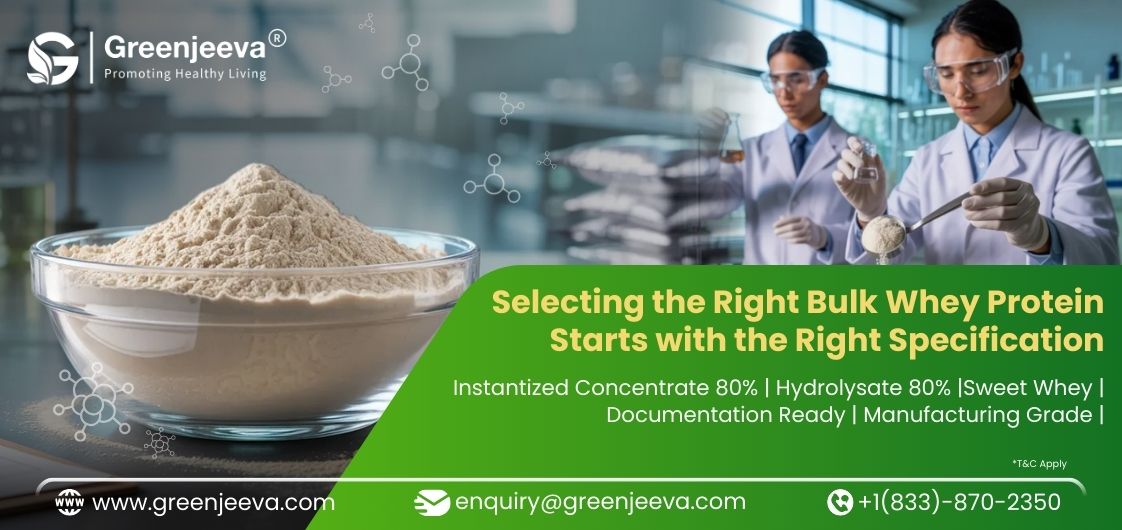
Whey Protein Powder 80% Concentrate, Instantized
Whey Protein Powder 80% Concentrate, Instantized (WPC 80) is widely used in RTD and powdered beverages due to its balance of functionality and cost efficiency.
Key characteristics:
- ~80% protein (dry basis)
- Moderate lactose content
- Good emulsification properties
- Stable in dairy-based beverage systems
- Instantized for improved dispersibility
For protein shakes and dairy RTDs, instantized WPC 80 provides strong mouthfeel, improved body, and stable protein distribution when processed correctly.
Whey Protein Hydrolysate Powder 80%, Instantized
Whey protein hydrolysate powder, instantized at 80%, is enzymatically hydrolyzed, breaking proteins into smaller peptides.
Functional advantages:
- Faster solubility
- Lower viscosity compared to intact proteins
- Improved clarity in certain beverage systems
- Suitable for high-protein performance beverages
Bulk whey protein hydrolysate requires careful flavor system balancing due to potential bitterness. However, in performance beverage lines, they are often preferred for dispersibility and specialized formulation needs.
Bulk Natural Pure Whey Isolate vs Concentrate vs Hydrolysate
When selecting bulk natural pure whey isolate or comparing it to concentrate and hydrolysate, buyers typically evaluate the following:

For lactose-sensitive formulations or high-protein-per-serving targets, isolate may be preferred. However, cost efficiency and sensory impact often drive the final decision.
Technical Factors R&D Teams Should Evaluate Before Buying Whey Protein Powder Bulk
Before committing to whey protein powder wholesale contracts, R&D and QA teams should verify the following:
1. Protein Content and Moisture
Confirm protein percentage on a dry basis and moisture limits.
2. Solubility Index
Critical for RTD beverages and cold-fill systems.
3. Heat Stability
Especially important for UHT processing.
4. Microbiological Specifications
- Total Plate Count
- Yeast and Mold
- Salmonella
- Coliforms
5. Heavy Metal Testing
Lead, cadmium, arsenic, and mercury limits must align with regional regulations.
6. Allergen Declaration
Milk-derived proteins require mandatory allergen labeling in most markets.
7. Instantization Agent
Confirm lecithin source (soy or sunflower) for clean-label positioning.
How to Evaluate a Bulk Whey Protein Powder Supplier
Selecting a bulk whey protein powder supplier involves more than reviewing pricing.
Documentation Checklist
A reliable supplier should provide the following:
- Certificate of Analysis (COA)
- Specification sheet
- Allergen statement
- MSDS/SDS
- Non-GMO declaration (if required)
- Country of origin
- Export documentation (if applicable)
For buyers seeking a sweet whey powder supplier in the USA, additional checks may include the following:
- FSMA compliance
- rBST-free declarations
- Domestic warehousing availability
- Third-party lab validation
Considerations for Whey Protein Powder Exports
For companies involved in whey protein powder exports, procurement teams must verify the following:
- Harmonized tariff codes
- Dairy import permits
- EU-compliant documentation where applicable
- FDA compliance for USA
- Labeling regulations in destination country
Export-ready suppliers should have structured documentation processes to reduce customs delays and regulatory risk.
What Procurement Teams Should Confirm Before Finalizing a Whey Protein Powder Wholesale Agreement
- Minimum Order Quantity (MOQ)
- Lead time and production scheduling
- Inventory availability in USA or export origin
- Shelf life and storage requirements
- Batch consistency history
- Long-term price stability agreements
In beverage manufacturing, batch-to-batch consistency is often more important than minor cost fluctuations.

Market Outlook and Growth Trends
Across North America and Europe, RTD protein beverages continue expanding, while India and Australia are experiencing rapid growth in protein-enriched drink formats. This sustained demand has increased global competition for high-quality whey ingredients.
Manufacturers are increasingly prioritizing:
- Export-ready suppliers
- Consistent protein quality
- Stable pricing structures
- Transparent dairy sourcing
- Scalable bulk supply agreements
As the functional beverage sector matures, whey selection decisions are becoming more technical and less commodi-driven.
Final Thoughts
Selecting the right bulk whey protein powder for functional beverage manufacturing is less about protein percentage and more about how the ingredient performs in your specific processing environment. Heat stability, dispersibility, documentation readiness, and batch consistency all influence long-term production efficiency.
For manufacturers scaling across domestic and export markets, working with suppliers who understand both formulation needs and regulatory compliance can reduce delays and reformulation risks. Companies like Green Jeeva support beverage manufacturers with clearly specified whey protein ingredients and structured bulk supply, helping procurement and R&D teams move from validation to production with greater confidence.
In competitive beverage categories, ingredient reliability often becomes a quiet but decisive advantage.

.jpg)