The Complete Guide to Turmeric Powder for Industrial & Bulk Applications
.jpg)
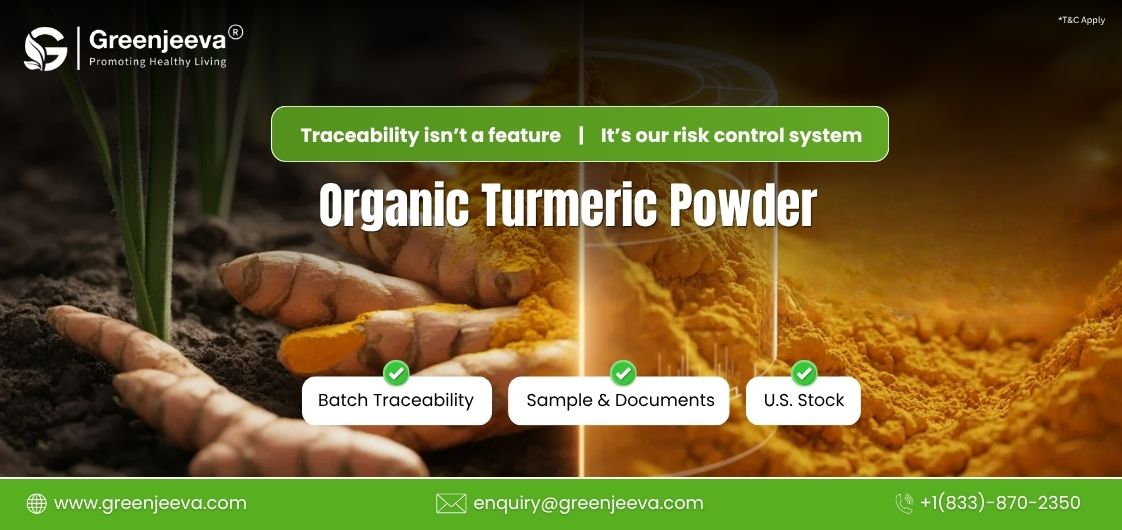
Turmeric powder remains one of the most widely used botanical ingredients across nutraceutical, food, beverage, personal care, and specialty manufacturing industries. Derived from the dried rhizomes of Curcuma longa, turmeric powder is valued for its vibrant color, naturally occurring curcuminoids, and compatibility with a broad range of formulations.
However, from a procurement and formulation standpoint, turmeric powder is not a single-format ingredient. Manufacturers encounter multiple variations including organic turmeric powder, turmeric root powder, bulk turmeric powder, standardized extracts, ratio extracts, and fermented formats. Each serves a different functional and sourcing objective.
This guide explores turmeric powder from an industrial perspective — including forms, quality parameters, applications, and supply chain considerations relevant to bulk buyers.
What Is Turmeric Powder?
Turmeric powder is produced by harvesting mature turmeric rhizomes, cleaning them, drying them under controlled conditions, and grinding them into a fine powder.
When labeled as turmeric root powder, the ingredient consists of whole dried rhizome that has been milled without solvent extraction or compound standardization. It retains its naturally occurring phytochemical profile, including native curcuminoids.
Organic turmeric powder follows the same production process but is sourced from certified organic farms and processed according to regulated organic handling standards.
For manufacturers, the distinction between turmeric powder and turmeric extract powder is critical. Whole root powder provides full-spectrum botanical material, while extracts are concentrated forms designed for standardized potency.
Organic Turmeric Powder vs Conventional Turmeric Powder
One of the first sourcing decisions manufacturers make is whether to use organic turmeric powder or conventional turmeric powder.
The difference primarily involves:
- Agricultural practices
- Certification requirements
- Traceability documentation
- Regulatory positioning
- End-product labeling
Organic turmeric root powder must be cultivated without synthetic pesticides or fertilizers and must maintain chain-of-custody documentation throughout processing.
From a physical standpoint, organic and conventional turmeric powder may exhibit similar mesh size and color characteristics. However, certification status affects procurement pathways and compliance documentation requirements.
Manufacturers targeting clean-label or certified organic product lines typically prioritize bulk organic turmeric powder to align with regulatory and branding objectives.
Turmeric Root Powder vs Standardized Extract
Understanding the difference between turmeric root powder and extract forms prevents formulation and sourcing confusion.
Turmeric Root Powder
Ground whole rhizome
Naturally occurring curcuminoids (non-standardized)
Broad phytochemical profile
Typically contains native curcuminoids in lower percentage ranges
Standardized Extract Formats
Some manufacturers require higher concentration of specific compounds. In those cases, they may evaluate options such as:
- Turmeric Extract Powder 95% Curcuminoids
- Turmeric Root Extract Powder 4:1
- Organic Turmeric Extract Powder 95% Curcuminoids HPLC
- Organic Curcuma longa Extract Powder 4:1
These formats differ significantly from turmeric root powder in potency, processing method, and cost structure.
Whole turmeric powder provides full botanical composition, whereas standardized turmeric curcumin powder delivers concentrated curcuminoids verified through analytical testing methods such as HPLC.
Selecting between these formats depends on formulation design, dosage structure, and regulatory positioning.
Different Forms of Turmeric for Manufacturing Applications
To support diverse industrial needs, turmeric is available in multiple variations. These may include:
- Turmeric Root Powder
-Turmeric Extract Powder 95% Curcuminoids
-Organic Turmeric Extract Powder 95% Curcuminoids HPLC
-Turmeric Root Extract Powder 4:1
- Organic Curcuma longa Extract Powder 4:1
Each variation addresses different manufacturing goals — from full-spectrum botanical use to standardized concentration or differentiated product positioning.
This pillar page focuses primarily on turmeric powder and organic turmeric root powder, while extract-specific considerations can be explored in dedicated extract-focused resources.

Quality Parameters to Evaluate in Bulk Turmeric Powder
When sourcing bulk turmeric powder, procurement teams should assess several technical parameters.
Moisture Content
Controlled moisture levels support product stability and reduce microbial growth risk during storage.
Mesh Size
Common industrial mesh sizes (such as 60 mesh) influence blending consistency and application compatibility.
Microbial Standards
Testing for total plate count, yeast and mold levels, and absence of pathogens is essential for regulatory compliance.
Heavy Metal Testing
Testing for lead, arsenic, cadmium, and mercury supports safety and export readiness.
Adulteration Monitoring
Given turmeric’s global demand, reliable turmeric powder suppliers conduct identity testing and contamination screening to maintain batch integrity.
Access to comprehensive Certificates of Analysis (COA) remains a critical factor when selecting a turmeric powder supplier.
Industrial Applications of Turmeric Powder
Turmeric powder serves multiple industrial sectors.
Nutraceutical Manufacturing
Capsules, tablets, sachets, and botanical blends often incorporate organic turmeric root powder or turmeric curcumin powder depending on formulation objectives.
Functional Food & Beverage Systems
Turmeric powder is used in beverage mixes, dairy alternatives, seasoning blends, and bakery systems where color and botanical positioning are important.
In certain product categories, formulators may also explore Fermented Turmeric Powder for differentiated positioning within botanical blends.
Personal Care & Cosmetic Formulations
Turmeric root powder may be incorporated into topical systems for its botanical profile and natural pigment properties.
Pet Nutrition & Specialty Products
Bulk turmeric powder may be evaluated within botanical formulations designed for companion animal or specialty product categories.
Application suitability depends on particle size, stability requirements, and regulatory considerations.
Bulk & Wholesale Turmeric Powder Sourcing Considerations
Manufacturers evaluating wholesale turmeric powder should consider the following:
- Country of origin
- Farming practices
- Organic certification validity
- Processing controls
- Extract standardization method (if applicable)
- Inventory location
- Import/export documentation
- Supply continuity
Bulk turmeric powder sourced through structured supply chains reduces production disruptions and improves operational predictability.
Domestic inventory availability may also reduce lead times and support same-day or expedited fulfillment needs.
Supply Chain: From Farm to Warehouse
Understanding the turmeric supply chain improves sourcing transparency.
Typical stages include:
- Cultivation and harvesting
- Cleaning and slicing
- Controlled drying
- Grinding into turmeric root powder
- Laboratory testing
- Packaging into bulk formats
- Export documentation
- Domestic warehousing and distribution
Manufacturers relying on bulk organic turmeric powder benefit from suppliers that maintain clear traceability and documented compliance across each stage.
Inventory warehousing within the United States may reduce shipping variability and simplify logistics coordination.
Selecting a Reliable Turmeric Powder Supplier
Choosing the right turmeric powder supplier extends beyond pricing.
Procurement teams should evaluate:
- Batch-to-batch consistency
- COA transparency
- Testing methodology
- Documentation completeness
- Organic certification (USDA NOP)
- Extract standardization verification (where applicable)
- Packaging formats for bulk transport
- Sample availability for validation
Working with a structured bulk turmeric powder supplier supports long-term procurement efficiency and operational continuity.

Strategic Positioning of Turmeric Variations in Manufacturing
The turmeric category includes:
- Whole turmeric root powder
- Organic turmeric powder
- Standardized extract powders (95% curcuminoids)
- Ratio extracts such as 4:1
- Fermented variants
Each format supports different formulation objectives. Manufacturers must align ingredient format selection with regulatory requirements, product claims framework, labeling strategy, and cost modeling.
Understanding these distinctions ensures that turmeric powder selection aligns with both formulation design and supply chain stability.
Conclusion
Turmeric powder remains a foundational botanical ingredient across industrial manufacturing sectors. However, selecting the appropriate format — whether bulk organic turmeric powder, turmeric root powder, bulk turmeric powder, or a standardized extract variation — requires careful evaluation of quality parameters, application suitability, and sourcing logistics.
By understanding differences in processing, standardization, certification, and supply chain structure, manufacturers can make informed procurement decisions that support consistency and operational efficiency.
For businesses sourcing bulk organic turmeric root powder, working with a transparent and documentation-driven turmeric powder supplier like Green Jeeva ensures reliability from farm to final delivery.
**The Food and Drug Administration has not evaluated these statements. This product is not intended to diagnose, treat, cure, or prevent any disease.**