Non-GMO Bulk Cocoa Powder and Clean Label Expectations in Modern Product Development
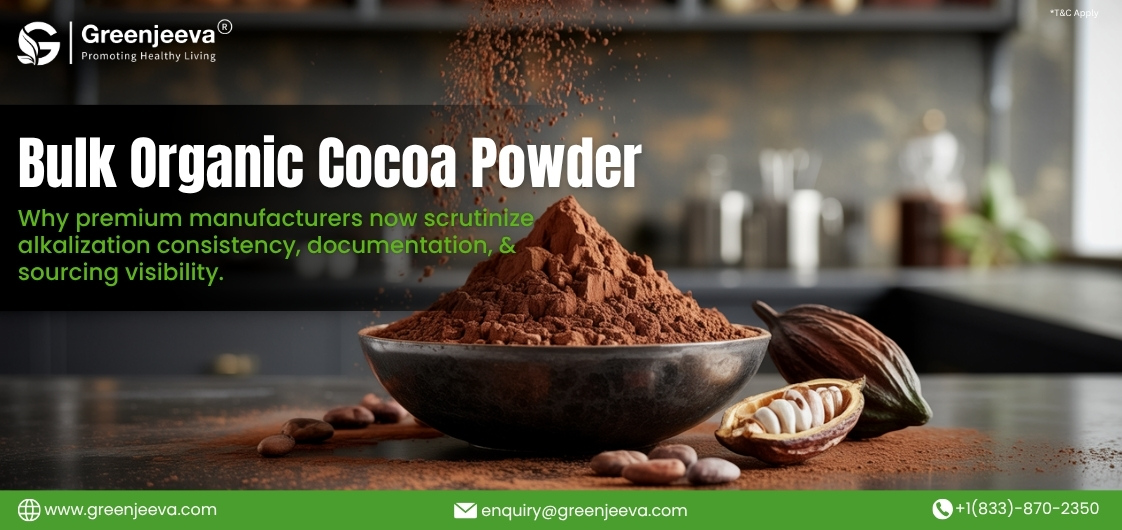
Premium food and wellness manufacturers no longer evaluate cocoa ingredients on flavor alone. Procurement teams now examine sourcing transparency, certification readiness, processing consistency, and supply reliability before approving an ingredient for production.
That shift has changed how manufacturers source alkalized cocoa powder in 2026.
Clean-label expectations continue to influence formulation decisions across functional foods, nutraceuticals, bakery products, beverages, and plant-based applications. At the same time, supply chain volatility and growing documentation requirements have made supplier qualification more technical than ever.
For procurement managers and product developers, cocoa sourcing now involves balancing sensory performance with operational reliability. Manufacturers want ingredients that support consistent production while meeting non-GMO, vegan, and certification requirements across multiple markets.
Why Clean Label Standards Are Reshaping Cocoa Procurement
Clean-label sourcing has evolved far beyond ingredient simplicity. Manufacturers now expect transparency throughout the supply chain, especially for globally sourced ingredients like cocoa.
Buyers increasingly request information about processing methods, origin traceability, allergen status, and certification validity before approving a supplier. This is particularly important in premium product categories where ingredient sourcing directly affects brand positioning.
Non-GMO bulk cocoa powder has become a frequent requirement in private-label and premium formulations. Many retailers and contract manufacturers now include non-GMO expectations within their supplier qualification process, even when regulatory requirements differ across regions.
Vegan cocoa powder demand has also expanded beyond plant-based foods alone. Product developers in nutrition blends, beverage systems, and wellness categories increasingly prefer ingredients compatible with broader clean-label positioning.
At the same time, ethical sourcing conversations continue to shape procurement decisions. Manufacturers want more visibility into cocoa supply chains due to growing concerns around sustainability, labor practices, and long-term sourcing stability.
As a result, procurement teams increasingly favor suppliers that can provide both technical documentation and sourcing transparency without delays.
Understanding Alkalized Cocoa Powder in Commercial Manufacturing
Alkalized cocoa powder, commonly known as Dutch-processed cocoa, undergoes treatment with an alkalizing agent to modify acidity, flavor profile, color, and dispersion characteristics.
In commercial manufacturing, 10–12% alkalized cocoa powder is commonly selected for its balanced performance across multiple applications. The process reduces natural acidity while producing a smoother flavor profile and darker appearance compared to natural cocoa powder.
For manufacturers, these processing characteristics directly affect formulation consistency.
In beverage systems, alkalized cocoa powder generally disperses more efficiently and creates a more uniform appearance. In bakery and confectionery applications, it helps standardize color and flavor across production batches.
Batch consistency remains one of the most important evaluation factors during supplier selection. Procurement teams often prioritize suppliers capable of maintaining stable particle size, color profile, moisture parameters, and flavor consistency across shipments.
Technical transparency also matters when discussing cocoa powder flavonoids. Alkalization can influence naturally occurring flavonoid levels depending on processing intensity. Product developers increasingly request processing information to better understand how cocoa ingredients align with their formulation objectives and label positioning.
This level of scrutiny reflects a broader industry shift toward data-backed ingredient sourcing rather than commodity purchasing alone.

Supplier Evaluation Criteria for Bulk Cocoa Powder Procurement
Supplier qualification for cocoa powder wholesale has become significantly more documentation-driven in recent years.
Most procurement teams now evaluate suppliers across four core areas:
- Quality consistency
- Documentation readiness
- Supply reliability
- Operational responsiveness
Before approving a bulk cocoa powder supplier in the USA, manufacturers typically request detailed specifications and compliance records. These often include:
- Certificate of Analysis (COA)
- Heavy metal testing
- Microbiological compliance
- Allergen declarations
- GMO status verification
- Country-of-origin information
Certification readiness also plays a major role in supplier evaluation. Depending on the target market, buyers may require USDA organic cocoa powder documentation, kosher certification, halal certification, or third-party non-GMO verification.
Fast access to documents has become increasingly important for procurement teams working under compressed product development timelines. Delays in documentation can slow supplier approval, reformulation projects, and production scheduling.
Domestic inventory availability also influences purchasing decisions. Manufacturers sourcing from a USA warehouse often reduce lead-time uncertainty and improve inventory planning flexibility compared to overseas-only fulfillment models.
In practice, sourcing reliability now extends beyond pricing. Buyers increasingly evaluate communication responsiveness, sample turnaround time, and documentation accessibility as indicators of long-term supplier performance.
Cocoa Ingredients Across Modern Manufacturing Categories
The role of Theobroma cacao powder has expanded well beyond traditional confectionery manufacturing.
Today, cocoa ingredients appear across multiple commercial categories, including
- Functional beverage blends
- Nutritional powders
- Protein formulations
- Premium bakery systems
- Plant-based foods
- Cosmetic and personal care applications
In functional food manufacturing, formulators often use alkalized cocoa powder to support flavor standardization and visual consistency in protein blends and powdered beverage systems.
In premium bakery products, consistency remains critical. Variations in cocoa color or flavor profile can create visible production inconsistencies across finished batches, especially in large-scale manufacturing environments.
Cosmetic manufacturers also increasingly evaluate traceable cocoa ingredients for masks, scrubs, and wellness-oriented formulations. In these categories, sourcing transparency and documentation often influence purchasing decisions as much as ingredient functionality itself.
This broader application range has increased pressure on suppliers to maintain stable quality specifications across multiple industries simultaneously.
Why Transparency Has Become a Competitive Requirement
Ingredient procurement has become more collaborative and data-focused than transactional.
Manufacturers increasingly expect suppliers to provide visibility into sourcing practices, processing standards, and compliance readiness without extensive back-and-forth communication.
This expectation is particularly strong among premium brands where ingredient sourcing supports broader clean-label positioning.
Buyers now routinely evaluate:
- Traceability practices
- Ethical sourcing disclosures
- Certification validity
- Documentation accessibility
- Inventory stability
- Supply continuity planning
The shift toward digital procurement has also changed buyer expectations around technical access. Many sourcing teams prefer suppliers that provide downloadable specifications, compliance records, and testing documents through centralized systems.
Operational efficiency matters because procurement delays directly affect formulation timelines and manufacturing schedules.
As cocoa sourcing becomes more strategic, long-term supplier relationships increasingly depend on consistency, responsiveness, and transparency rather than pricing alone.

What Manufacturers Should Prioritize in 2026–27
Procurement teams evaluating bulk organic cocoa powder supplier options should focus on operational reliability as much as ingredient specifications.
Several recurring issues continue to create sourcing challenges across the industry:
- Inconsistent alkalization levels
- Batch-to-batch color variation
- Delayed compliance documentation
- Inventory instability
- Limited warehouse availability
- Slow sample dispatch timelines
These issues often create downstream formulation problems that increase development costs and delay production schedules.
As a result, experienced buyers increasingly prioritize suppliers capable of supporting faster qualification workflows with transparent documentation practices and dependable inventory access.
For many manufacturers, cocoa procurement is no longer treated as a commodity purchase. It has become part of a broader product quality and brand consistency strategy.
Conclusion
Clean-label expectations continue to reshape how manufacturers evaluate cocoa ingredients across premium product categories.
Procurement teams now expect more than stable pricing. They want sourcing transparency, documentation readiness, reliable inventory access, and consistent ingredient performance across production cycles.
As alkalized cocoa powder applications expand across food, nutraceutical, beverage, and wellness manufacturing, supplier evaluation has become increasingly technical and operationally focused.
Manufacturers that prioritize consistency, traceability, and supplier responsiveness position themselves to reduce sourcing risk while maintaining formulation reliability in a more demanding procurement environment.