What Should Buyers Check Before Sourcing Bulk Coenzyme Q10 Powder
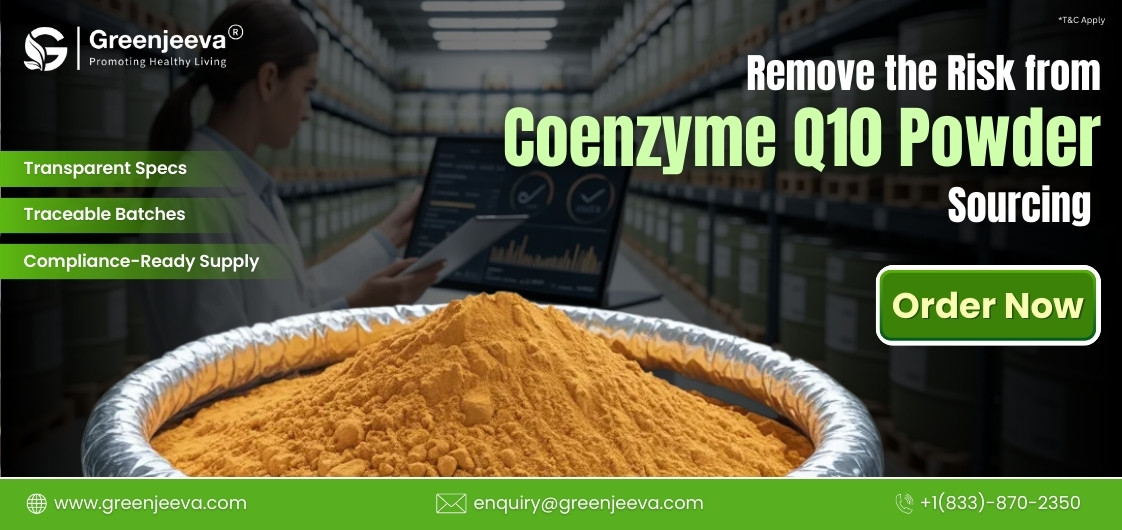
Selecting the right Coenzyme Q10 powder for industrial use is a technical decision that impacts formulation behavior, regulatory alignment, and production consistency. Because bulk coenzyme powder is used in precise inclusion levels across capsules, tablets, softgels, functional foods, and specialized formulations, even small deviations in purity, particle size, or stability can create downstream manufacturing challenges. This makes supplier qualification a critical step, not a routine purchase.
Before selecting a Coenzyme powder supplier or wholesaler, buyers need a clear understanding of quality benchmarks, production methods, compliance documentation, and storage considerations. The checkpoints below outline what sourcing teams should verify to ensure industrial suitability and long-term supply reliability.
What raw material quality standards should buyers verify for Coenzyme Q10 powder?
The first checkpoint is confirming that the ingredient meets recognized Coenzyme Q10 raw material quality standards. High-grade material is typically tested using validated analytical methods such as HPLC to confirm identity and assay levels. Industrial buyers should verify:
- Assay percentage and purity profile
- Presence of related substances or isomers
- Residual solvent limits
- Microbiological parameters
- Heavy metal limits
Consistency between batches is just as important as passing a single test. Reliable CoQ10 bulk ingredient documentation should show batch-to-batch uniformity across multiple production lots. This reduces the risk of formulation adjustments during scale-up.
Why does production method matter when sourcing bulk coenzyme powder?
Buyers should understand whether the material is produced through fermentation or chemical synthesis. The comparison of Fermented Coenzyme Q10 vs synthetic versions is a common evaluation step for R&D and sourcing teams.
Fermentation-derived material is often selected for its bioidentical structure and alignment with clean-label positioning. Synthetic routes can also produce high-purity material but may require closer review of impurity profiles and processing aids. From a procurement standpoint, the production method affects:
- Impurity screening requirements
- Labeling declarations
- Supplier audit criteria
- Sustainability documentation
Clear traceability from production to packaging supports risk management and simplifies internal compliance reviews.
What should be included in a CoQ10 powder specification sheet for industrial use?
A detailed CoQ10 powder specification sheet gives formulators and QA teams the data needed to integrate the ingredient smoothly into manufacturing workflows. Beyond assay and purity, the specification should define:
- Particle size distribution
- Bulk density and flow characteristics
- Solubility profile (oil dispersibility, water-dispersible variants if applicable)
- Loss on drying or moisture limits
- Appearance and color range
These parameters influence blending performance, encapsulation efficiency, and finished product uniformity. Without a clear specification framework, production teams may face unexpected handling challenges during large-scale batching.

How do buyers confirm Coenzyme Q10 ingredient compliance in the USA?
For products manufactured or sold in the United States, Coenzyme Q10 ingredient compliance USA requirements must be part of the supplier evaluation process. Buyers should confirm that the material is produced under food-grade or dietary supplement-grade GMP systems and supported by proper documentation.
Key compliance elements include:
- Manufacturing facility certifications (GMP, ISO, or equivalent)
- Allergen statements
- Non-GMO declarations if required for label positioning
- Residual solvent compliance with recognized safety guidelines
- Proper labeling and transportation classification
Procurement teams should also verify that documentation aligns with internal regulatory review procedures, especially for brands selling across multiple states or export markets.
What CoQ10 bulk ingredient documentation should a supplier provide?
Before approving a Coenzyme powder wholesaler, buyers should request a full documentation package for each lot. Standard CoQ10 bulk ingredient documentation typically includes:
- Certificate of Analysis (CoA) with batch-specific results
- Material Safety Data Sheet (MSDS or SDS)
- Country of Origin statement
- Manufacturing process summary (high level)
- Stability or retest date information
Traceability should allow the material to be tracked from raw input through processing and final packaging. This becomes critical during audits, product investigations, or customer documentation requests.
How does stability affect sourcing decisions for Coenzyme Q10 powder?
Coenzyme Q10 powder is sensitive to light and oxidation, so packaging and storage conditions influence shelf life. Buyers should confirm:
- Recommended storage temperature and humidity
- Packaging type (foil bags, nitrogen flushing, fiber drums with liners)
- Transport protection measures
Improper storage during shipping or warehousing can reduce potency over time, leading to out-of-spec finished products. Reliable suppliers outline clear handling guidance within the CoQ10 powder specification sheet and safety documentation.
Why do manufacturers include Coenzyme Q10 powder in formulations?
From an industrial standpoint, the benefits of coenzyme q10 relate to its functional role as a lipid-soluble compound used in structured nutrient blends and specialty formulations. Its compatibility with oil-based systems and availability in multiple physical forms make it suitable for softgels, capsules, tablets, and certain functional food matrices.
For sourcing teams, the focus should remain on material performance, stability, and compatibility with other ingredients rather than end-consumer positioning. This keeps procurement decisions aligned with formulation requirements and regulatory frameworks.

What makes a dependable Coenzyme powder supplier for ongoing bulk supply?
A qualified Coenzyme powder supplier should demonstrate:
- Consistent production capacity
- Transparent quality systems
- Responsive technical support
- Stable lead times
- Clear communication around specification updates
Long-term partnerships with a Coenzyme powder wholesaler are built on predictable quality and documentation accuracy, not just pricing. This stability helps manufacturers avoid reformulation delays and supply interruptions.
Conclusion
Selecting the right source for bulk coenzyme Q10 powder involves technical review, regulatory alignment, and documentation verification. Buyers who assess Coenzyme Q10 raw material quality standards, review a detailed specification sheet, and confirm ingredient compliance with USA requirements are better positioned to maintain production consistency and reduce supply chain risk. Evaluating Fermented Coenzyme Q10 vs synthetic production methods and securing complete CoQ10 bulk ingredient documentation further strengthens procurement decisions.
For manufacturers who require a structured documentation package and industrial-grade material, Green Jeeva supports sourcing teams with free samples, clear specification data, batch-level documentation, and compliance-ready ingredient information. Register for free to access these resources.
**The Food and Drug Administration has not evaluated these statements. This product is not intended to diagnose, treat, cure, or prevent any disease.**